Puzzle games represent the most popular gaming genre on the planet, with 63% of gamers worldwide playing casual puzzle titles according to Newzoo’s 2024 data. The $6.28 billion puzzle video game market continues expanding, projected to reach $9.86 billion by 2033.
But puzzle games aren’t just entertainment—they’re backed by scientific research demonstrating real cognitive benefits. This guide explores the science, traces the genre’s 40-year evolution, and provides strategies to improve your puzzle-solving abilities.
The Science: Do Puzzle Games Actually Improve Your Brain?
This is the question everyone asks—and the answer requires nuance.
What the Research Actually Shows
Positive Findings:
A study from the University of Michigan found that people who do puzzles for 25 minutes a day showed an improvement in their IQ scores by four points.
Research published in PLOS ONE (2018) demonstrated that jigsaw puzzling recruits multiple visuospatial cognitive abilities and may be a protective factor against cognitive aging. The study found that higher amounts of puzzling (over 9,100 connected pieces) showed potential for inducing relevant cognitive benefits.
Scientists at Nanyang Technological University found that adults who played the physics-based puzzle game Cut the Rope regularly—for as little as an hour daily—showed improved executive functions. According to ScienceDaily, this was “the first study that showed broad transfer to several different executive functions.”
A 2022 randomized controlled trial by Duke University School of Medicine found that participants around age 71 who trained with crossword puzzles demonstrated greater cognitive improvement than those using computerized brain training games. MRI scans showed less brain shrinkage in the crossword group at 78 weeks.
Research published in PMC (2023) found that puzzle game playing activates the prefrontal cortex—the brain region involved in thinking, attention, and decision-making. After playing, participants showed decreased salivary cortisol and alpha-amylase levels, indicating reduced stress.
The Important Caveat:
Not all puzzle games deliver equal benefits. According to cognitive psychologist Fernand Gobet, studies have shown that doing well in commercial brain training games (like Lumosity) primarily improves performance at those specific games rather than transferring to real-life tasks.
Traditional puzzles (crosswords, jigsaw puzzles) and physics-based video games have shown stronger evidence of transferable benefits.
Cognitive Benefits Breakdown
| Benefit | Evidence Level | How Puzzles Help |
|---|---|---|
| Working Memory | Strong | Holding puzzle states in mind while planning |
| Visuospatial Skills | Strong | Rotating, manipulating, and recognizing patterns |
| Processing Speed | Moderate | Making quick decisions under time pressure |
| Executive Function | Moderate | Planning sequences and inhibiting impulsive moves |
| Stress Reduction | Strong | Flow state, measurable cortisol reduction |
The Flow State Factor
Beyond cognitive benefits, puzzle games reliably produce what psychologist Mihaly Csikszentmihalyi called “flow”—a mental state of complete absorption where:
- Time seems to pass differently
- Self-consciousness disappears
- The activity becomes intrinsically rewarding
- Stress and anxiety reduce
This explains why many people describe puzzles as “relaxing” despite requiring mental effort.
The History: From Tetris to Browser Games
Understanding puzzle game evolution reveals why certain mechanics remain popular decades later.
1984: Tetris Changes Everything
Russian software engineer Alexey Pajitnov created Tetris at the Soviet Academy of Sciences in Moscow. The name combines “tetra” (Greek for four) with tennis, Pajitnov’s favorite sport.
Why Tetris Worked:
- Simple rules, complex mastery
- Instant visual feedback
- Escalating difficulty (pieces fall faster)
- No endpoint—play indefinitely
- Satisfying line-clear mechanics
The 1989 Game Boy release sold millions and established puzzle games as mainstream entertainment. According to UMA Technology, Tetris helped define “casual gaming” by appealing to players regardless of age or experience.
1994-1997: Mobile Gaming Begins
The Hagenuk MT-2000 shipped with Tetris pre-installed in 1994—the first puzzle game on a mobile phone. Nokia’s Snake (1997) followed, eventually reaching 400 million devices worldwide.
2000-2001: Match-Three Revolution
PopCap Games released Bejeweled in 2001, starting as a browser-based game created by three developers working from a California apartment. The match-three mechanic proved irresistible.
Bejeweled’s Impact:
- Over 500 million downloads by 2013
- More than 10 billion hours played
- Inducted into the World Video Game Hall of Fame (2020)
- Seven sequels spanning two decades
2007-2012: The Smartphone Explosion
The iPhone (2007) and App Store created unprecedented puzzle game distribution. Key releases:
- Angry Birds (2009): Physics puzzles with character
- Candy Crush Saga (2012): Match-three perfected for mobile
- Puzzle & Dragons (2012): Match-three meets RPG
According to Business of Apps, Candy Crush has been downloaded more than three billion times and has generated over $1 billion annually since 2019.
2008-Present: Indie Innovation
Independent developers brought artistic and mechanical innovation:
- Braid (2008): Time manipulation puzzles
- Limbo (2010): Atmospheric physics puzzles
- Fez (2012): Perspective-shifting platforming
- The Witness (2016): Open-world puzzle exploration
- Return of the Obra Dinn (2018): Deductive reasoning masterpiece
Browser Games Today
Modern browser puzzle games combine decades of design learning with HTML5/WebGL technology, delivering experiences that rival downloadable titles without requiring installations.
Who Plays Puzzle Games? Demographics Deep Dive
Understanding puzzle game demographics reveals who these games serve.
Global Reach
According to Newzoo 2024 data:
- 3.32 billion gamers worldwide
- 63% play casual/puzzle games (most popular genre)
- 31% of US gamers play casual games (4th most popular genre, ahead of shooters)
Gender Distribution
Puzzle games show notably different gender patterns than other gaming genres:
| Metric | Female Players | Male Players |
|---|---|---|
| Daily Puzzle Time | 22 minutes | 19 minutes |
| Likelihood to Choose Casual | 16.8% higher | Baseline |
| Daily Play Rate | 74% play daily | Lower |
Source: GameHouse 2023 Survey, Udonis Mobile Gaming Report
Age Demographics
Puzzle games have unique age distribution compared to other genres:
- 43-52 year olds: Casual games are the #1 preferred genre
- 50+ players: Spend over 22 minutes daily on casual games
- Under 18: Growing fastest (8.2% CAGR), though they prefer action/adventure
- 18-35: Control 46% of online casual games market
According to GameTree research, casual games’ popularity among older populations stems from increased responsibilities that don’t allow time-intensive gaming.
Why These Demographics Matter for You
If you’re new to puzzle games, you’re joining the most popular gaming genre globally. If you’re already a puzzle fan, you’re part of a diverse community spanning all ages and backgrounds.
Types of Puzzle Games Explained
Understanding puzzle subcategories helps you find games matching your preferences.
Logic Puzzles
Games requiring deductive reasoning and systematic analysis.
Characteristics:
- Clear rules and constraints
- Often single correct solutions
- Reward methodical thinking
- Progress feels earned
Brain Benefits: Strong evidence for improving executive function and working memory.
Games to Try:
- City Constructor — Build cities following logical placement rules
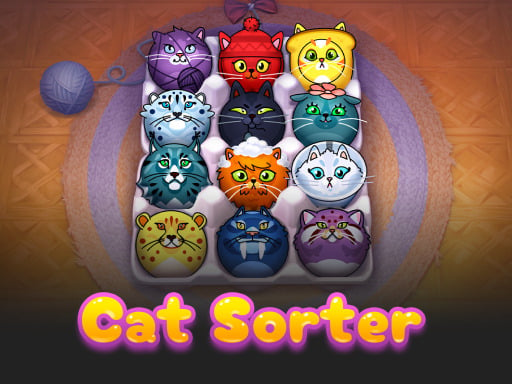
- CatSorter Puzzle — Sort cats by color using limited moves
Best For: Players who enjoy methodical problem-solving and don’t mind thinking before acting.
Match-Three & Matching Games
Connect similar elements to clear them from the board.
Characteristics:
- Pattern recognition focus
- Colorful, visually satisfying
- Combos and chain reactions
- Score-based progression
Brain Benefits: Improve processing speed and visual pattern recognition.
Market Dominance: Royal Match generated over $123 million in October 2024 alone, demonstrating the genre’s commercial power.
Best For: Players seeking relaxing gameplay with immediate visual feedback.
Physics Puzzles
Use realistic physics simulation to solve challenges.
Characteristics:
- Gravity, momentum, collision mechanics
- Often involve construction or destruction
- Multiple valid solutions
- Experimentation encouraged
Brain Benefits: Strong evidence from NTU study showing transfer to executive functions. Physics puzzles require predicting outcomes—a cognitively demanding task.
Games to Try:
- Death Slide Rescue — Draw paths to rescue falling characters
Best For: Creative thinkers who enjoy experimentation and “what if” scenarios.
Escape Room Puzzles
Find clues and solve varied puzzles to escape virtual environments.
Characteristics:
- Multiple puzzle types combined
- Narrative and atmosphere
- Hidden objects and clues
- Progressive revelation
Brain Benefits: Varied puzzle types engage multiple cognitive systems in single sessions.
Games to Try:
- Amgel Kids Room Escape 81 — Family-friendly escape challenges
- Amgel Kids Room Escape 82 — More escape room adventures
Best For: Players wanting variety and narrative in their puzzle experience.
Word & Number Puzzles
Games focused on language or mathematical relationships.
Characteristics:
- Language or math skills required
- Often daily challenge formats
- Social sharing of results (Wordle phenomenon)
- Clear success metrics
Brain Benefits: The Duke University study found crossword puzzles more effective than computerized brain training for cognitive protection.
Best For: Language enthusiasts and math lovers.
Strategies for Solving Puzzles Faster
Improve your puzzle performance with these evidence-based techniques.
1. Understand Before Acting
Most mistakes come from rushing into action:
- Read all instructions — Hidden rules create failed attempts
- Identify the win condition — What exactly must you achieve?
- Note constraints — What limits your options?
- Survey the entire puzzle — Not just the area you’re focused on
This mirrors expert problem-solving behavior across domains.
2. Start With Certainty
In any puzzle:
- Identify forced moves first — What must be true?
- Use process of elimination — What can’t be true?
- Build from confirmed information — Expand outward from certainties
- Delay guessing — Guess only when logic is exhausted
3. Recognize Patterns
Most puzzles contain underlying patterns:
| Pattern Type | Example | How to Spot |
|---|---|---|
| Symmetry | Solutions mirror across axis | Check if left matches right |
| Sequences | 1, 2, 3… or A, B, C… | Look for progressions |
| Constraints | Every row must contain X | Rules often imply patterns |
| Repetition | Same solution element reused | Notice recurring structures |
4. Work Backwards
When forward progress stalls:
- Visualize the goal state — What does solved look like?
- Determine final requirements — What must be true at the end?
- Trace back required steps — What enables the end state?
- Identify intermediate milestones — What must happen first?
This technique works especially well for maze puzzles and sequential challenges.
5. Take Strategic Breaks
Research supports the “incubation effect”—stepping away helps problem-solving:
- Your subconscious continues processing — Solutions often appear after breaks
- 5-10 minutes is often enough — You don’t need long interruptions
- Do something mildly engaging — Walk, simple chores, not another hard problem
- Return with fresh perspective — You’ll see things you missed
6. Learn From Failures
Every failed attempt provides information:
- What doesn’t work — Eliminate future dead ends
- Constraints you missed — Understand the problem better
- How mechanics behave — Learn the system
- New approaches to try — Failure suggests alternatives
The difference between struggling and improving is extracting lessons from failure.
Finding Your Optimal Challenge Level
Maximum enjoyment comes from appropriate difficulty—what Csikszentmihalyi called the “flow channel.”
Signs You’re in the Sweet Spot
- Need to think, but progress is possible
- Occasional “aha!” moments
- Satisfaction from solutions
- Time passes quickly
- Desire to continue playing
Signs It’s Too Easy
- Solving without real thought
- No satisfaction from completion
- Boredom or restlessness
- Going through motions
Solution: Increase difficulty or try new puzzle types.
Signs It’s Too Hard
- Constant frustration
- No progress despite effort
- Giving up frequently
- Avoiding the game
Solution: Decrease difficulty, try hints, or switch puzzle types.
Difficulty Progression Strategy
- Start at recommended difficulty — Game designers usually calibrate this
- If completing 80%+ easily — Move up one level
- If stuck frequently — Move down or use hints
- Try new puzzle types periodically — Avoid stagnation in single genre
Building a Puzzle Gaming Habit
For cognitive benefits, consistency matters more than marathon sessions.
Session Length Research
Studies suggest:
- 15-25 minutes is optimal — Long enough for engagement, short enough for focus
- Multiple short sessions beat one long one — Distributed practice is more effective
- Daily practice shows best results — Consistency builds skills
Weekly Variety Schedule
| Day | Focus | Why |
|---|---|---|
| Monday | Logic puzzles | Start week with analytical thinking |
| Tuesday | Physics puzzles | Creative problem-solving |
| Wednesday | Word/number puzzles | Language processing |
| Thursday | Match-three | Processing speed |
| Friday | Escape rooms | Varied challenges |
| Weekend | Player’s choice | Enjoy favorites |
Variety prevents burnout while engaging different cognitive systems.
Common Mistakes (And How to Avoid Them)
Rushing
Problem: Most failed attempts come from acting before thinking.
Solution: Pause 5-10 seconds before first move. Survey the entire puzzle.
Tunnel Vision
Problem: Focusing on one area while ignoring others.
Solution: Periodically zoom out mentally. Check edges and corners you’ve been ignoring.
Ignoring Hints
Problem: Treating hints as “cheating” and quitting frustrated instead.
Solution: Hints exist for learning. Using a hint teaches you patterns for future puzzles. Progress with hints beats quitting without them.
Playing While Tired
Problem: Mental fatigue significantly impairs puzzle performance.
Solution: Play when alert. If concentration fades, stop. Fresh mind solves faster than exhausted persistence.
Getting Started Today
Ready to begin? Here’s your puzzle game starter guide:
For Beginners
Start with accessible options that teach while entertaining:
- CatSorter Puzzle — Intuitive sorting mechanics with forgiving difficulty
- Match-three games in our puzzle collection — Familiar format, clear goals
For Intermediate Players
Ready for more challenge:
- City Constructor — Complex constraints, multiple solution paths
- Death Slide Rescue — Physics prediction and creative solutions
For Advanced Players
Test your limits:
- Amgel Kids Room Escape 81 — Multi-puzzle integrated challenges
- Amgel Kids Room Escape 82 — Additional escape room complexity
Browse our complete puzzle games collection for hundreds of options across all difficulty levels.
Frequently Asked Questions
Do puzzle games really make you smarter?
The evidence is nuanced. Research shows puzzle games can improve specific cognitive abilities—especially visuospatial skills, working memory, and executive function. The University of Michigan found 25 minutes daily of puzzle play improved IQ scores by 4 points. However, commercial “brain training” games haven’t shown strong evidence of real-world transfer. Traditional puzzles (crosswords, jigsaw) and physics-based games show the strongest benefits.
What’s the best puzzle game for brain health?
Based on research, crossword puzzles show strong evidence for cognitive protection in older adults (Duke University study). For video games, physics puzzles like Cut the Rope demonstrated transfer to executive functions (NTU study). The best choice depends on your preferences—any puzzle game you’ll play consistently beats a “better” one you’ll abandon.
How long should I play puzzle games daily?
Research suggests 15-25 minutes daily is optimal. This provides enough time for engagement without mental fatigue. Multiple shorter sessions appear more effective than single long sessions. Consistency matters more than duration.
Are puzzle games good for stress relief?
Yes—and measurably so. Research published in PMC showed puzzle game players had reduced cortisol and alpha-amylase levels (stress biomarkers) after playing. The flow state puzzle games induce provides mental escape from daily worries while maintaining engagement.
Why do I get stuck on puzzles?
Common reasons include: not fully understanding the rules, tunnel vision (focusing on one area), mental fatigue, missing a constraint, or approaching the problem wrong. Take a break—research shows the subconscious continues working on problems, and solutions often appear after stepping away.
Are browser puzzle games as good as app versions?
Modern HTML5 browser games match most app experiences. Advantages include: no installation, no storage usage, instant access, and cross-device play. Some complex games may run smoother as native apps, but for most puzzle games, browser versions perform identically.
Conclusion
Puzzle games represent gaming at its most accessible and beneficial. Backed by research showing cognitive improvements and stress reduction, enjoyed by over 2 billion people worldwide, and available instantly in your browser—puzzle games offer genuine value beyond entertainment.
The genre’s 40-year evolution from Tetris to modern browser games has refined what works: simple rules hiding deep complexity, instant feedback, achievable challenges, and that satisfying “aha” moment when solutions click.
Whether you have 5 minutes or an hour, prefer logic or creativity, want relaxation or challenge—there’s a puzzle game for you. The barrier to entry is simply clicking a link.
Your brain will thank you.
Looking for other game types? Check out our Best Free Browser Games of 2025 or learn 10 Tips to Improve Your Gaming Skills.
Sources
- Duke University School of Medicine: Crossword Study
- ScienceDaily: Puzzle Games and Mental Flexibility
- PMC: Jigsaw Puzzles and Cognitive Aging
- PMC: Stress and Cognition in Puzzle Games
- Verified Market Reports: Puzzle Video Game Market
- Sonamine: Gaming Demographics 2024
- Business of Apps: Puzzle Games Revenue
- GamesRadar: Match-Three Legacy
- Medium/PubNative: Mobile Gaming History