Racing games demand more than fast reflexes. The techniques used by real racing drivers—proper racing lines, trail braking, weight transfer understanding—apply directly to virtual racing. Whether you’re playing casual browser racing games or competitive sim racers, these principles will make you faster.
The racing games market reached $5.17 billion in 2024 and is projected to grow to $15 billion by 2035, with 45% of the global racing audience preferring mobile-based games. Browser racing games represent an accessible entry point to racing fundamentals before investing in full sim racing setups.
The Racing Line: What Professionals Actually Do
Every racing driver learns the racing line. But many amateur players misunderstand what it actually optimizes for.
The Four Points of Every Corner
According to Driver61’s racing line analysis, every corner has four critical points:
- Braking Point — Where you begin slowing down
- Turn-In Point — Where you start steering into the corner
- Apex/Clipping Point — The innermost point of your arc
- Exit Point — Where you straighten the wheel and accelerate
Why Exit Speed Matters Most
The ideal racing line isn’t the shortest path—it prioritizes exit speed. As BMW’s pro gaming tips explain:
“If a curve is followed by a long straight, then the focus is not so much on entering the corner, but on exiting it. So you enter the corner more slowly, orient the car towards the exit faster and get back on the gas as early as possible.”
The math:
- Faster corner entry + slow exit = lost time on entire following straight
- Slower corner entry + fast exit = carrying extra speed down entire straight
The straight after a corner matters more than the corner itself.
Practical Racing Line Execution
Standard Racing Line (Right-Hand Corner):

     Entry (wide)
          \
           \  Turn-in point
            \
             \
              * ← Apex (touch inside)
             /
            /
           /   Exit (track out)
          /
     Exit (wide, full throttle)
Key adjustments:
- Hairpins: Late apex, sacrifice entry for acceleration zone
- Fast sweepers: Early apex, maintain speed throughout
- Before long straights: Prioritize exit speed above all else
- Series of corners: Compromise first corner to set up second
Trail Braking: The Advanced Technique
Most beginners brake in a straight line, then turn. Professionals use trail braking—and it’s faster.
What Trail Braking Is
According to BMW’s racing guide:
“Normally, you brake before a curve, turn in and then start accelerating again. Trail braking is different: You stay on the brakes as you enter the curve, but with less force than when braking on a straight. You brake into the corner smoothly and use the shifting forward of the weight of the car for more grip on the front wheels.”
The Physics Behind It
When you brake, weight transfers to the front wheels. This creates:
- More grip on front tires — Better turn-in response
- Less grip on rear tires — Car rotates more easily
- Later braking point — You’re still slowing while turning
Trail Braking Execution
| Phase | Brake Pressure | Steering |
|---|---|---|
| Approach | 100% | None |
| Turn-in | 70% | Beginning to turn |
| Mid-corner | 30% → 0% | Maximum steering |
| Apex | 0% | Unwinding |
| Exit | 0% (throttle) | Straightening |
Practice progression:
- Brake normally, note your turn-in point
- Brake 10% later, trail brake into corner
- Gradually extend braking deeper into corners
- Eventually brake and turn simultaneously
Common Trail Braking Mistakes
- Too much brake pressure while turning — Spin or understeer
- Releasing brake too suddenly — Weight shifts abruptly
- Not looking far enough ahead — Can’t anticipate release point
Understanding Weight Transfer
Every racing technique relates to weight transfer. Master this concept and everything else makes sense.
How Weight Shifts
| Action | Weight Movement | Effect |
|---|---|---|
| Accelerate | Backward | Rear grip increases, front decreases |
| Brake | Forward | Front grip increases, rear decreases |
| Turn left | Right | Right-side tires grip more |
| Turn right | Left | Left-side tires grip more |
Using Weight Transfer Intentionally
To initiate oversteer (rear slides):
- Trail brake into corner (weight forward)
- Lift throttle mid-corner (shifts weight forward)
- Quick steering input while lifting
To maintain understeer stability:
- Complete braking before turning
- Gentle throttle application through corner
- Gradual inputs, no sudden changes
To recover from slides:
- Counter-steer (turn wheels toward the slide)
- Gradual throttle adjustment
- Don’t panic-brake (worsens weight shift)
Drifting: When Style Meets Speed
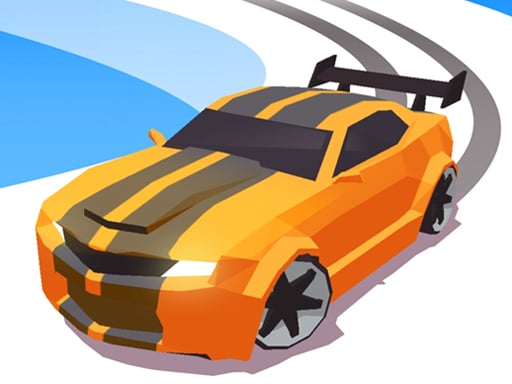
In drift-focused games like Retro Drift, different techniques apply.
The Critical Timing Rule
According to Traxion’s drifting guide:
“For it to be considered ‘a drift’ you must have the car in a slide before the corner’s apex.”
If you initiate the slide at or after the apex, you’re just crashing in slow motion.
Drift Initiation Methods
Weight Transfer (Feint):
- Flick steering opposite to corner direction
- Quickly turn toward corner
- Weight shift destabilizes rear
Braking Drift:
- Brake hard approaching corner
- Turn in while still braking
- Rear lightens and breaks loose
Power Over (RWD vehicles):
- Turn into corner
- Apply heavy throttle
- Rear wheels spin, breaking traction
Clutch Kick: According to SimRacingCockpit.gg: “A clutch kick involves briefly disengaging the clutch and then quickly re-engaging it, causing a sudden increase in engine RPM and wheel speed.”
Maintaining the Drift
As Traxion explains:
“Once you’re in the middle of the drift, the goal is to get to a point where you have a constant steering lock and you’re controlling it with the throttle. As the slip angle increases, use the throttle to maintain that drift.”
Balance points:
- More throttle = Wider drift angle, more rotation
- Less throttle = Tighter drift, regaining grip
- Opposite lock = Counter-steering to control direction
Drifting Practice Progression
- Learn throttle control first — Start with lower angle settings
- Feather throttle — Don’t go full throttle immediately
- Master counter-steering — Don’t rely on automatic wheel correction
- Chain drifts together — Connect corners smoothly
Track Memorization Strategy
Knowing the track is often more important than pure driving skill.
The Three-Lap Learning Method
Lap 1: Exploration (70% pace)
- Identify corner types (hairpin, sweeper, chicane)
- Note braking reference points
- Find track features for markers
- Don’t push—observe
Lap 2: Refinement (85% pace)
- Apply racing lines to each corner
- Test braking points
- Identify where you’re slow
- Make mental notes
Lap 3+: Optimization (95%+ pace)
- Push limits on familiar sections
- Experiment with alternatives
- Build consistent lap times
- Refine weak sections
Corner Type Reference
| Corner Type | Characteristics | Approach |
|---|---|---|
| Hairpin | 180° turn, tight | Heavy braking, late apex, patience |
| Sweeper | Long radius, high speed | Minimal braking, early apex |
| Chicane | Quick direction change | Find rhythm, sacrifice first corner |
| Kink | Slight deviation | Flat if possible, minimal lift |
| Hill Crest | Elevation change | Prepare for grip change on landing |
Visual Markers
Look for consistent reference points:
- Distance boards (100m, 50m markers)
- Curbing patterns — Where curbs start/end
- Track features — Cracks, patches, shadows
- Surrounding objects — Signs, buildings, trees
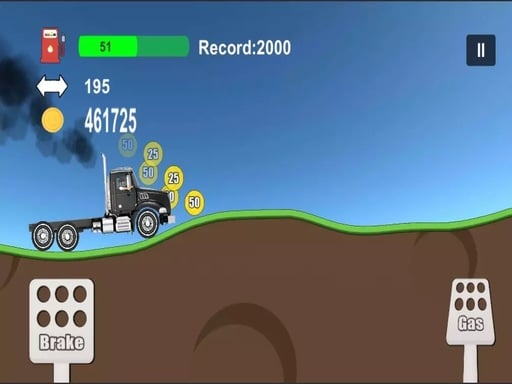
In Mad Racing: Hill Climb, terrain features become your markers.
Vehicle Setup Principles
Understanding how vehicle stats affect performance helps you choose and upgrade wisely.
The Four Core Stats
Top Speed
- Maximum velocity on straights
- Priority: Long straight tracks
- Less important: Technical tracks with many corners
Acceleration
- How quickly you reach top speed
- Priority: Tracks with many corners (frequent slowdowns)
- Helps recover from mistakes
Handling/Grip
- How responsive the vehicle turns
- Priority: Technical tracks, tight corners
- Higher = more forgiving of inputs
Braking
- How quickly you slow down
- Priority: High-speed tracks with heavy braking zones
- Allows later braking points
Upgrade Prioritization
| Track Type | Priority Order |
|---|---|
| Technical (many corners) | Handling → Acceleration → Braking → Speed |
| High-speed (long straights) | Speed → Braking → Acceleration → Handling |
| Mixed | Balance all stats evenly |
| Hill Climb | Acceleration → Handling → Braking → Speed |
The Mental Game
Racing requires focus, patience, and emotional control.
Consistency Over Speed
According to Apex Sim Racing’s guide:
“Aim for consistent lap times rather than just one fast lap to improve race performance.”
One fast lap means nothing if you crash the next three. Build consistency first, then push for speed.
When Leading
- Don’t look back constantly — Focus on your driving
- Maintain your rhythm — Don’t suddenly drive defensively
- Hit your marks — Consistent laps maintain gaps
- Avoid unnecessary risks — You have the position already
When Chasing
- Stay close without forcing — Pressure causes mistakes
- Wait for opportunities — Don’t create risky moves
- Study opponent patterns — Where do they struggle?
- Be patient — One good move beats three failed attempts
Recovering from Mistakes
- Don’t panic — Stay calm, regain control
- Assess damage — Are you still competitive?
- Resume racing line — Get back to proper technique
- Forget the mistake — Don’t let it affect next corner
The Restart Trap
Many players restart after any mistake. This prevents learning:
- You never practice recovery
- You never build consistency
- You never experience race pressure
- Imperfect laps still teach technique
Unless the mistake makes the run impossible to recover, keep racing.
Browser Racing Game Applications
These techniques apply to browser racing games with appropriate adaptation.
Retro Drift
- Focus on drift initiation timing
- Chain drifts for maximum score
- Use visual markers for consistency
- Higher angles = more points (typically)
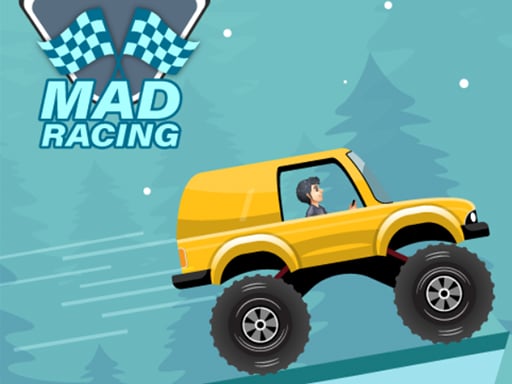
Mad Racing: Hill Climb
- Throttle control prevents flipping
- Maintain momentum over bumps
- Engine upgrades for steep climbs
- Learn terrain patterns through repetition
Monster Truck Supra Race
- Momentum carries through obstacles
- Landing position matters
- Don’t over-rotate on jumps
- Suspension absorbs impact—use it
Real Car Racing Stunt Rider 3D
- Commit fully to stunts
- Speed into ramps correctly
- Land wheels-down for bonuses
- Some stunts are optional—calculate risk
Practice Structure
Daily Session (20 minutes)
Warm-up (5 minutes):
- Familiar track at 80% pace
- Focus on smooth inputs
- Build concentration
Skill work (10 minutes):
- Practice one specific technique
- Same corner/section repeatedly
- Track improvement quantitatively
Application (5 minutes):
- Full runs applying the technique
- Note where it breaks down
- End on a successful run if possible
Weekly Goals
- Master racing line on one new track
- Improve personal best on practice track
- Try one new racing game/mode
- Focus on weakest technique area
Frequently Asked Questions
Is drifting faster than grip racing?
In most racing games, no. Grip racing (maintaining traction through corners) is typically faster because you’re not scrubbing speed through tire slip. However, in drift-focused games that reward style or build boost through sliding, drifting is the intended fast method. Know which type your game is.
Should I use automatic or manual transmission?
For casual play, automatic is fine. For competitive play, manual transmission offers advantages:
- Engine braking into corners
- Precise gear selection for power bands
- More control over acceleration
- Required for clutch-kick drifting
How do I stop spinning out?
Spins happen when you exceed rear tire grip. Common causes:
- Too much throttle exiting corners
- Sudden steering inputs
- Braking while turning sharply
- Over-correcting slides
Solutions: Smooth inputs, gradual throttle application, complete braking before turning, gentle corrections.
Why am I slower when I try harder?
“Overdriving” is real. When you push too hard:
- Tense muscles make inputs jerky
- You brake later but carry less speed through corners
- Mistakes compound across the lap
- Mental fatigue sets in faster
Smooth driving is fast driving. Controlled aggression beats frantic pushing.
How important is equipment for racing games?
For browser games, standard mouse/keyboard or gamepad works fine. For serious sim racing, dedicated wheels and pedals provide significant advantages through force feedback and analog control precision. But equipment can’t substitute for technique knowledge.
Conclusion
Racing games reward those who understand the physics and techniques that real drivers use. The racing line, trail braking, weight transfer, and drifting fundamentals apply whether you’re playing a browser racing game or a full racing simulator.
The key insight: fast driving looks smooth, not aggressive. The drivers who appear calm and controlled are typically the ones setting the fastest times.
Start with one technique—the racing line is the foundation. Master it before adding complexity. Then gradually incorporate trail braking, weight transfer awareness, and corner-specific strategies.
The $5 billion racing game market continues growing because racing games offer genuine skill development and progression. Your improvement is visible and measurable.
Ready to practice? Browse our racing games collection and start applying these techniques.
Want to improve at other game types? Read our Complete Guide to .io Games or check out 10 Research-Backed Ways to Improve Gaming Skills.